Remote-Control Mowing for Slopes, Ponds, and High-Risk Terrain
Every commercial property has a few areas nobody wants to mow: the steep bank behind the parking lot, the edge of the detention pond, the drainage channel that stays soft for days after a storm.
But those areas still need regular maintenance. The question is how to do it without putting someone on a riding mower on ground that can tip it. Remote-controlled mowing is one of the most practical answers, and one of the clearest examples of how technology is transforming commercial landscaping in ways that make the work safer.
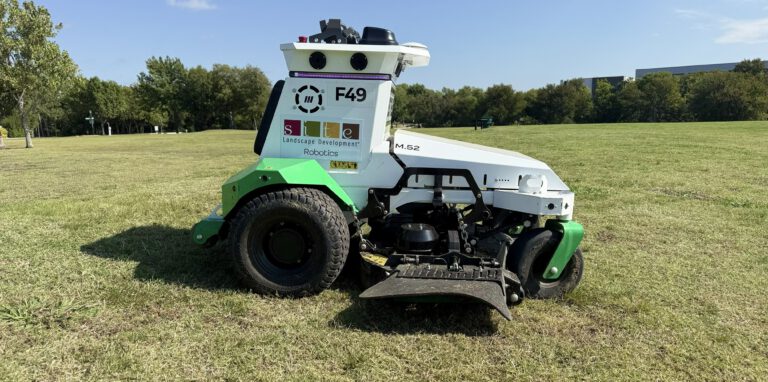
At Site Landscape Development, we deploy remote-controlled mowing systems for challenging terrain, safety-sensitive areas, and high-risk slopes, so trained operators can maintain them without riding equipment onto unstable ground.
Why Riding Equipment Struggles on This Terrain
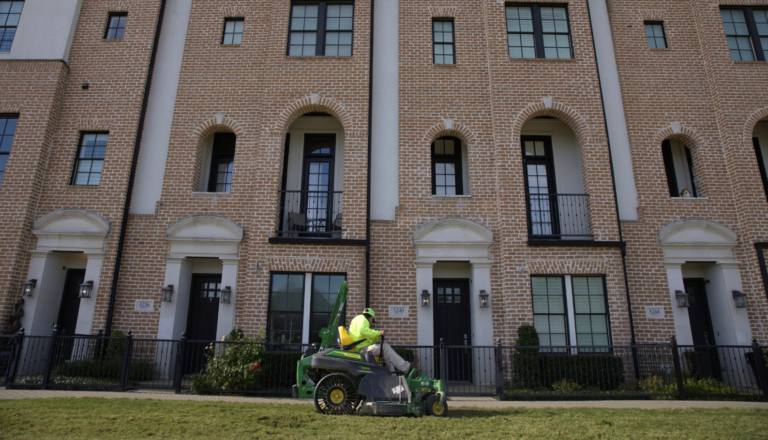
Riding mowers and tractors are built for flat or gently sloped ground. On steep embankments, wet slopes and pond edges, they can lose traction or tip, and the operator is sitting on the machine when it happens.
Rollovers on slopes are a well-known hazard in commercial mowing. Wet grass, soft soil after rain and hidden ruts make it worse, and many of the steepest areas on a commercial site sit right next to water.
The common workarounds have their own problems:
- String trimmers on foot are slow on large slopes and put crew members on unstable ground for long stretches.
- Skipping the area lets vegetation grow until it becomes a bigger, more expensive job, and can hide erosion or drainage problems.
- Pushing riding equipment where it shouldn’t go is the riskiest option of all.
Where Remote-Control Mowing Fits
Detention ponds and drainage channels
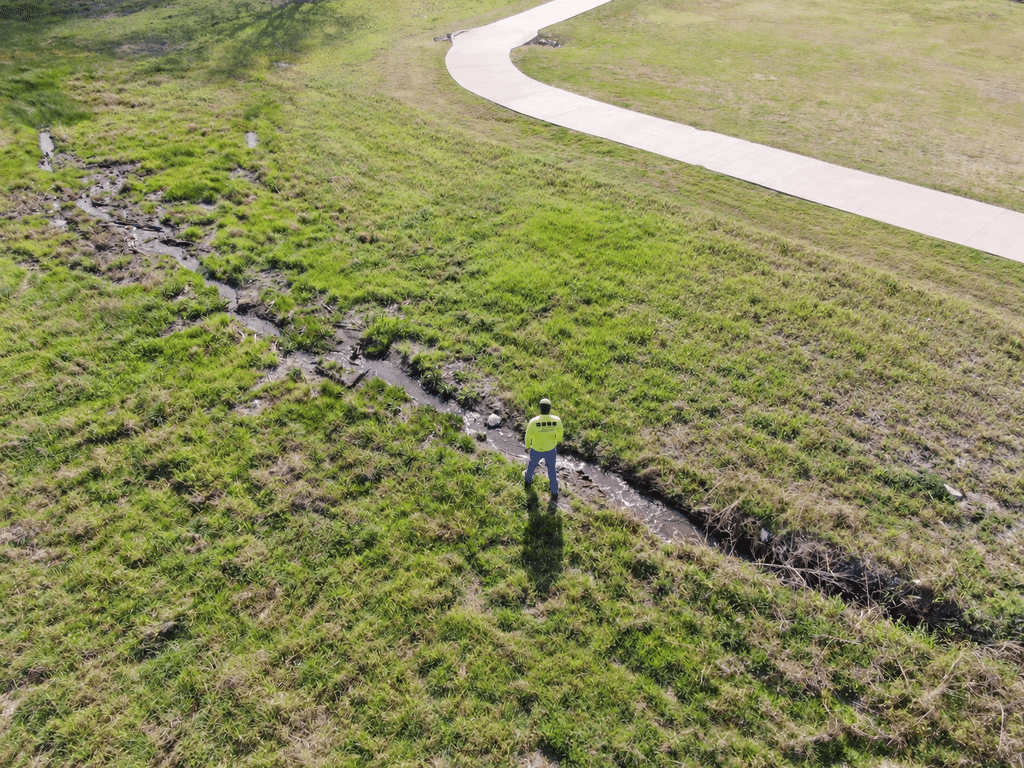
Pond banks and drainage channels are some of the most common high-risk areas on commercial properties. They are often steep, frequently wet, and right at the water’s edge. Keeping them mowed also makes it easier to spot erosion, debris and drainage problems early.
Steep embankments and graded slopes
Highway-facing berms, graded slopes around parking lots and embankments behind buildings are visible to everyone who drives past. They need to look maintained, but they are exactly the terrain where riding equipment is a poor fit.
Right-of-way and hard-to-reach areas
Right-of-way strips, uneven ground and areas with limited access can be difficult to reach safely with larger equipment. A remote-controlled mower can work these areas while the operator stays on stable ground.
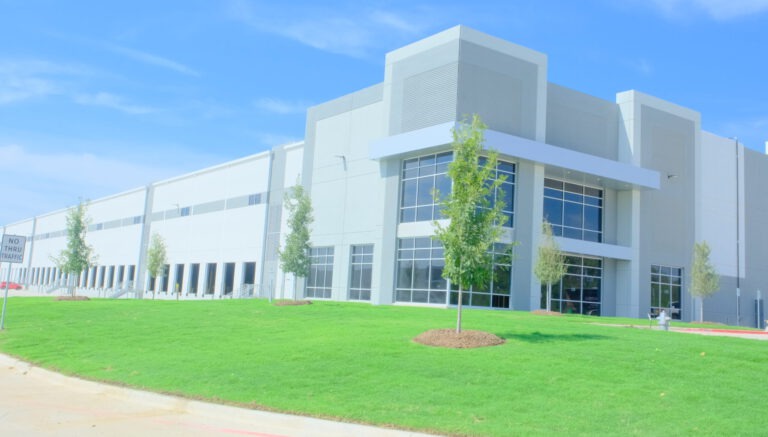
We use our remote-controlled mowers most on HOA communities and warehouse complexes with steep slopes around ponds, including an HOA community in Celina and the native areas and pond banks at a warehouse park in DFW.
How Remote-Control Mowing Works
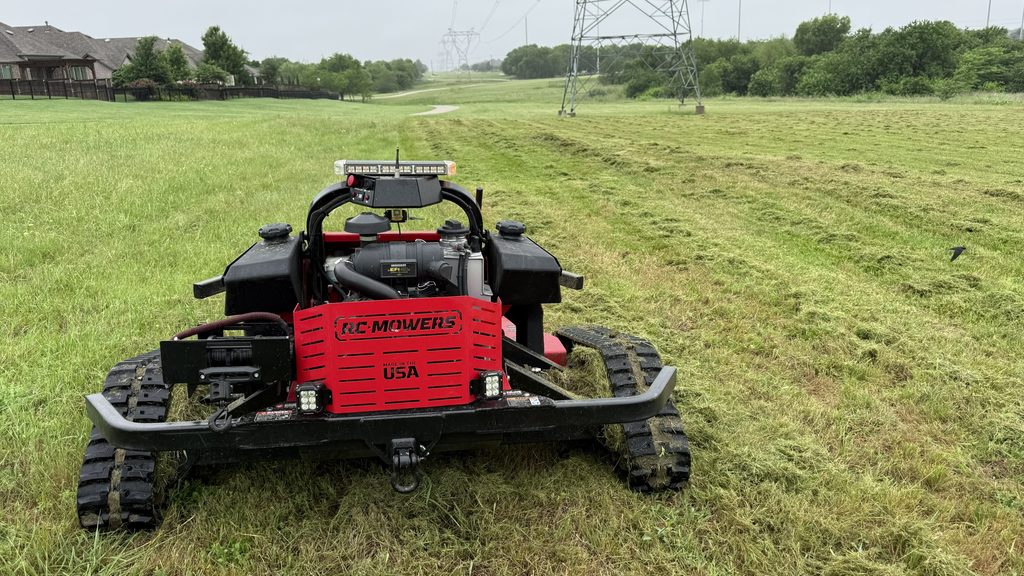
A remote-controlled mower is operated by a trained crew member using a handheld controller. The operator stays on stable, level ground with a clear view of the machine, while the mower works the slope, bank or channel.
That changes the risk in a simple way: if the ground is unstable, the operator isn’t on it.
Remote-controlled slope mowers are also built differently from riding equipment. They are typically low and wide, often running on tracks, so they stay stable on grades where a riding mower would struggle. Many can cut heavier, overgrown vegetation as well as regular turf, which helps on banks and channels that only get mowed a few times a year.
At Site Landscape Development, our RC mowing programs are built around three things:
- Safety-first operations. Remote operation keeps crew members off slopes and hazardous zones.
- Skilled technicians. Our operators go through specialized training to work these areas efficiently and precisely.
- Reduced disruption. Remote systems allow mowing with less noise and site interruption than high-impact traditional equipment.
Planning Around Weather and Timing
High-risk areas in North Texas are often the last to dry out after a storm. Clay soil holds water, and pond banks and drainage channels can stay soft for days.
A good program plans for that. High-risk zones are scheduled for when ground conditions allow, and the crew has a clear rule for when an area is too wet to work, even with remote equipment. Mowing at the right time also protects the slope itself, since heavy equipment on soft ground can leave ruts that start erosion.
When an area is too wet to mow, the crew holds off and comes back the following day.
The Liability Question for Property Managers
When a contractor’s crew member is injured on your property, the impact doesn’t stop with the contractor. It can mean an incident on site, questions about how the work was planned, and disruption for tenants and ownership.
That is why it is worth knowing how your contractor handles the riskiest areas of your property. A few questions to ask:
- Which areas of the property do you consider high-risk for mowing?
- What equipment do you use on slopes, pond banks and drainage channels?
- Are operators trained specifically for that equipment and terrain?
- What happens to those areas when conditions are too wet to work safely?
If the answer to the second question is “the same riding mowers we use everywhere else,” that is worth a closer conversation.
Remote-Control Mowing Alongside Field Mowing
Remote-controlled mowing isn’t meant to cover a whole property. Most sites combine it with other equipment, each used where it fits best.
Open acreage, fields and right-of-way strips on flat ground are usually best handled with tractors, shredders and other field mowing equipment. Remote-controlled mowers take over where the terrain turns steep, wet or risky. On some properties, autonomous mowers cover large open turf as well.
Our commercial field mowing services use a fleet that includes tractors, shredders, zero-turn mowers, remote-controlled mowers and autonomous mowers, so each part of a property gets the right machine.
Getting Started
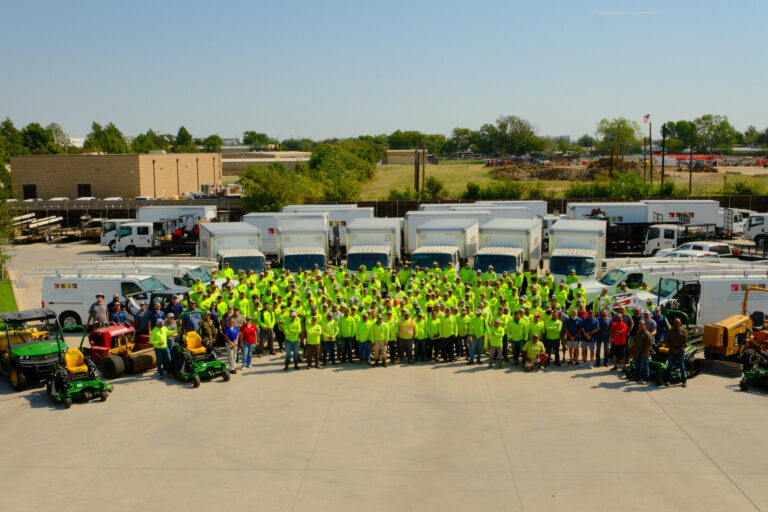
Our team works with property managers across Dallas–Fort Worth to keep those areas maintained without putting crews at unnecessary risk.
If your property has slopes, pond banks or drainage areas that are hard to maintain safely, the first step is a walk of the site to identify the high-risk zones and match each one with the right equipment. With the right plan in place, the hardest areas on your property can be maintained as safely and consistently as the rest of it.