Autonomous Mowing on Commercial Properties: What It Actually Changes
Autonomous mowers get a lot of attention. The marketing version usually shows a robot quietly cutting a perfect lawn while nobody lifts a finger.
The real version is more useful and usually less dramatic. Autonomous mowing is one of the most practical pieces of how technology is transforming commercial landscaping, but it works best as part of a program run by skilled crews, not as a replacement for them.
At one of the HOA communities we manage, our Scythe mowers cover all of the sports fields and open areas. Large, manicured open spaces like these are where commercial autonomous mowers work best today.
Here is what autonomous mowing actually changes on a commercial property, what it doesn’t, and what a property manager should expect.
The Two Types of Autonomous Mowers
Not every property needs the same equipment. At Site Landscape Development, we use two systems and choose between them, or combine them, based on the site and its needs.
Commercial-scale systems (Scythe)
Scythe mowers are built for broad, open turf: business parks, campuses, large common areas and fields where a traditional crew would spend hours making the same passes.
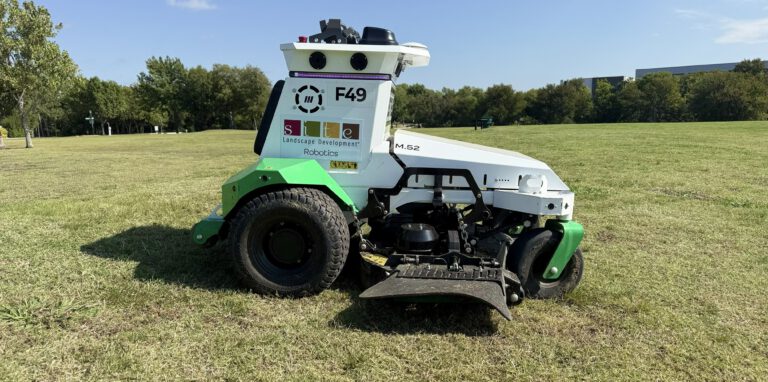
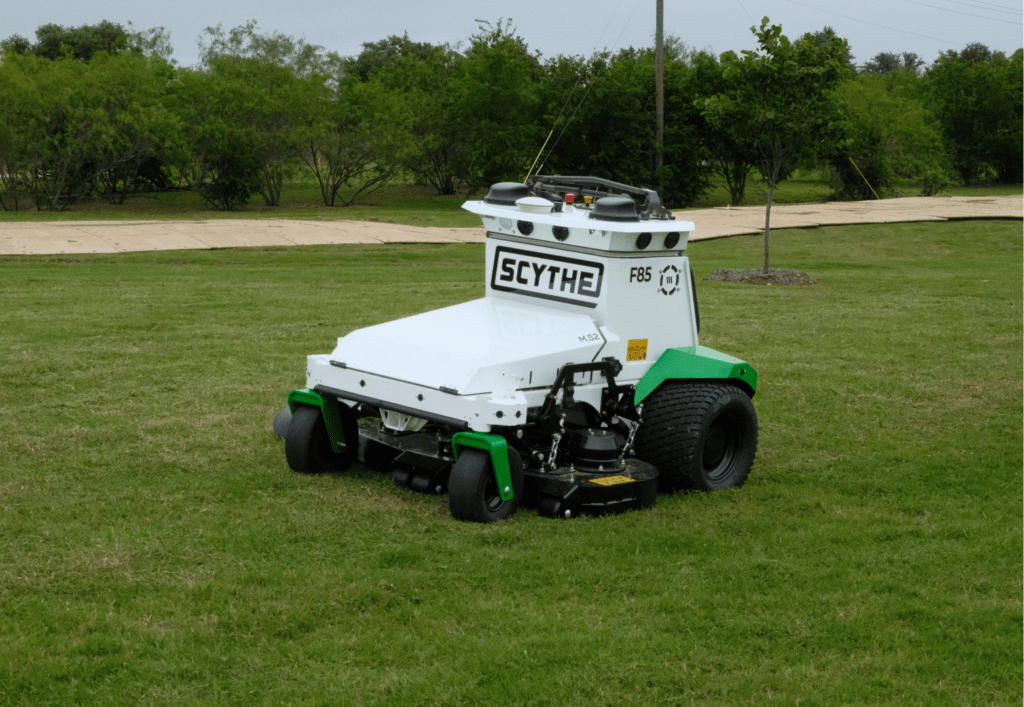
The Scythe M.52 is a fully autonomous, all-electric commercial mower. It uses sensors and intelligent navigation to cover large areas and work around obstacles while it mows.
These machines are designed to fit into a professional maintenance workflow. The mower handles the wide, open sections of the site, while the crew covers everything around it.
Today we run Scythe mowers on larger HOA communities and warehouse properties with open areas of two acres or more, where the machines work best. During the growing season, they mow about 30 properties a week.
Defined-zone systems (Segway Navimow)
Segway Navimow systems handle more precisely defined mowing areas, such as courtyards, amenity lawns and green space around buildings.
They use mapping and obstacle-avoidance technology to mow without the physical boundary wires older robotic mowers needed. That makes them practical for areas with clear edges and regular shapes.
What Actually Changes on the Property
Where crew time goes
Mowing is one of the most repetitive and labor-intensive parts of commercial maintenance. On a large site, it can take up a big share of every visit.
When a machine handles the repetitive passes, crews can spend that time on work that takes skill and judgment: edging, bed maintenance, pruning, irrigation checks, cleanup and inspections. The property gets the same mowing plus more attention to the details tenants actually notice.
On our properties, a one-person Scythe crew handles the large open areas, so the regularly scheduled maintenance crew can spend its visit on the detailed areas of the property.
Consistency
An autonomous mower follows the same mapped pattern every time. That makes the cut more consistent from visit to visit and across large areas that might otherwise be split between different operators.
On a large site, that consistency shows. Stripes line up, edges of open areas stay even, and no section gets skipped because a crew ran short on time. For a property manager, that means fewer walk-through notes and fewer “can you hit that area again” requests.
Mowing frequency stays the same as any maintenance schedule. If it’s too wet to mow, we hold off until the following day, just as we would with a traditional crew.
Noise, emissions and tenant experience
Because the Scythe M.52 is all-electric, it runs without the noise of a gas engine and produces no tailpipe emissions while it mows. That matters around offices, schools, residential communities and other occupied properties.
What Does Not Change
Autonomous mowing handles the repetitive work. It does not replace the people who take care of the property.
Crews still handle:
- Detail mowing around tight spaces, slopes and obstacles
- Edging, trimming and bed maintenance
- Storm cleanup and anything that requires judgment
- Seasonal work such as color changes, pruning and leaf removal
- Inspections and communication with the property manager
Some areas are better suited to traditional equipment. In many cases, autonomous mowing works alongside traditional field mowing so every part of the property is covered by the right method.
Setting this expectation early matters. A property manager who expects a robot to do everything will be disappointed. One who expects a better use of crew time will usually be satisfied.
Where Autonomous Mowing Fits Best
Autonomous mowing tends to fit well on:
- Large open turf areas, campuses and commercial properties
- Fields and open land that need frequent, consistent mowing
- Areas with obstacles that benefit from intelligent navigation
- Environmentally sensitive zones where a lighter equipment footprint is preferred
- Properties that need a mix of autonomous and traditional mowing
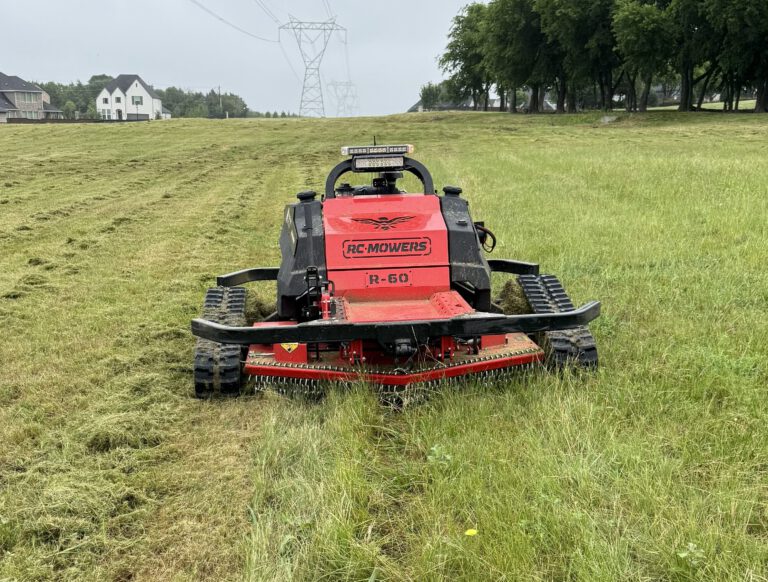
It tends to be a weaker fit on small sites with little open turf, steep slopes, pond banks and other difficult terrain. Those areas usually call for traditional equipment or specialized remote-controlled mowers operated by a trained crew member.
A few practical questions shape the decision:
- How much open turf is there? The more large, uninterrupted areas a site has, the more time an autonomous mower can take off the crew’s plate.
- How complex is the layout? Islands, light poles, signs and tight corners don’t rule out autonomous mowing, but they affect which system fits and how much detail mowing the crew still handles.
- How is the property used? Sites with steady foot traffic or events may need mowing zones and schedules planned around that activity.
We run autonomous mowers on commercial properties across DFW today, including in Lewisville. Every property is evaluated first to decide whether autonomous mowing makes sense and which system fits.
How We Start a New Property
Every new property starts with a walk of the full area to find obstacles or objects that aren’t obvious at first glance. Then we map the mowing boundaries and mark any no-go zones before the mower starts work.
Once the mower is running, we watch how it performs and adjust cutting height and speed for each area. Our Scythe crew works hand in hand with the account manager, who coordinates with the regular maintenance crew so everyone knows which areas are done. From time to time, we also send property managers a video of the mower at work.
Questions worth asking any contractor that offers autonomous mowing:
- Which areas of my property would the mower cover, and which would crews still mow?
- Which system would you use, and why?
- How is the mower monitored, and who responds if it stops?
- How will this change what the crew does on each visit?
Clear answers to these questions are a good sign the contractor has actually run the equipment, not just bought it.
Getting Started
If your property has large turf areas that eat up crew time every visit, autonomous mowing may be worth a look. The first step is an evaluation of the site to see which areas fit and which system makes sense.
Learn more about our autonomous mowing services, or reach out to our team to talk about your property.